How we work
Built to stay with innovators past the first year
Uganda does not have an entrepreneurship problem. It has an enterprise survival problem. Akili za Kesho is a private venture studio that works alongside universities and rooted in the community, to carry people from learning to a business that lasts.
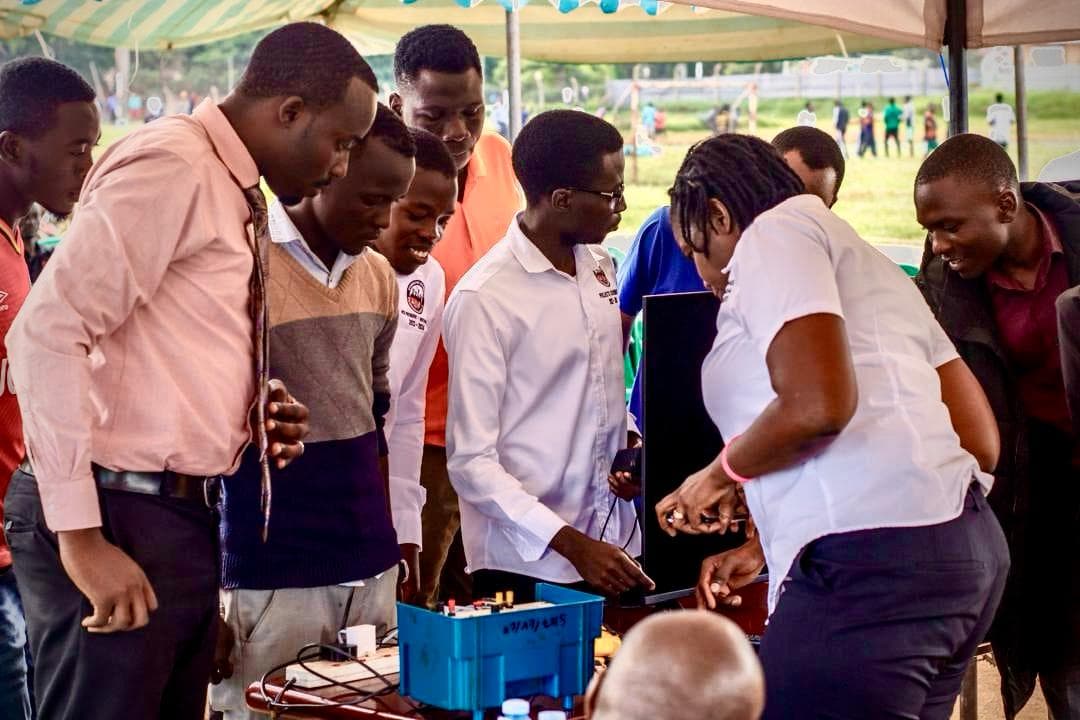
Community first
Institutions alongside, not instead.
The problem
Businesses rarely die in year one. They die while scaling.
Roughly six in seven Ugandan businesses survive their first year. The attrition happens between years one and five, in the move from starting to scaling. That is exactly when accelerator programmes have ended, grants are spent, and the founder needs tools, infrastructure, specialist skills and market access.
Most ecosystem support is concentrated in the first six months. The risk is concentrated in years two to five. The support and the risk are misaligned in time, and that gap is where we work.
- 1 year~85%
- 3 years~61%
- 5 years~47%
Indicative figures from a survival analysis of 317,850 businesses in Uganda Bureau of Statistics records (founded 1987 to 2010). The shape of the curve is reliable; treat the exact percentages as approximate. The data is older, and we will update it against current UBOS figures.
The continent is not short of hubs: the AfriLabs 2024 Impact Report counts 514 innovation hubs across 53 African countries. It is short of hubs resourced well enough to carry ventures through the years-two-to-five valley.
Why a partnership
Universities are built to teach. Venture building needs a different structure.
This is not a criticism. It is how institutions are designed: teaching, learning and research shape the budget, the staffing and the reporting.
What a hub inside a university has to do
- Divert revenue from the core teaching pillar to fund venture builders, engineers and commercial staff, or
- Run on a small budget, hold competitions and bootcamps, and be unable to support a venture past demo day.
- Carry the pressure of being judged on producing entrepreneurs, an outcome its structure is not built to deliver.
What the partnership offers
The institution keeps its pillars and its budget. We carry the venture-building function. The innovators produced are still recognised as students and alumni of the partner institution, so the university gets the outcome and the reputation without the organogram, the capital cost or the distraction.
Explore partnershipsThe model
What a private studio can hold
Builders, not lecturers
Venture builders, engineers, designers and commercial staff, hired against commercial rather than academic criteria.
A long horizon
We stay with a venture through years two to five, where the risk actually is, instead of stopping when a cohort ends.
Shared tooling
Platforms, cloud, payments and design capacity built once and used by many ventures, so no single start-up has to carry that cost alone.
Its own funding model
Revenue that does not require a partner institution to redirect tuition income away from teaching and learning.
The larger pool of innovators is in the community: people with trade skills, market knowledge and real problems, who never enrolled or who left. We build for them first, with products shaped by local cost, connectivity, device class and cash flow, and work with institutions alongside.
How people learn here
AI with judgement, not AI instead of it
The skill employers need is not using AI tools, and it is not working without them. It is working with AI and still owning the decision: directing it, questioning it, disagreeing with it and justifying the result.
Our learning platform is built against total reliance. The AI is a coach that guides and questions rather than handing over answers, and mastery is shown in hands-on labs and challenges, then checked on what you can do unassisted afterwards.
Try the learning platformGuided, not given
The learner makes the decision; the coach questions, probes and explains.
Proved in labs
Hands-on challenges rather than produced text.
Retested later
Success is what you can do unassisted, days afterwards.
Built for real devices
Designed for budget Android phones and patchy connections.
Bridging Technology and Nature
Our founding commitment, stated as what it is
It describes what we hope to design and develop, not what we have already built. We do not do environmental technology work today. What we do today is build the workforce it depends on: every camera trap, river gauge and soil probe is a connected device that someone must specify, connect, power and defend. That is the networking and cyber security skill we already teach as an accredited Cisco Networking Academy, with AFRALTI as our Academy Support Centre.
- Stage 1Next
Connected devices in the Academy
Introduce Internet of Things instruction inside our existing Cisco Networking Academy authorisation. Sensors and instrumented environments, not networks in the abstract.
- Stage 2Planned
One documented student prototype
A single environmental sensing instrument built by students with a partner institution, written up honestly: method, cost, failure modes and results.
- Stage 3Planned
Tooling as portfolio
Shared instrumentation and data tooling offered to conservation, agricultural and environmental organisations, on the same built-once, used-by-many basis.
Our rule: we describe nothing in the present tense until there is an artefact behind it that a sceptical reader can inspect. Each stage will be published with its evidence, including what failed.
Build with us
Universities, schools, employers, funders and innovators: if you want a structure that stays the course, talk to us.