




Home Page
August 25, 2020 2026-01-31 16:34Home Page
Gain World-Class, Practical Experience
We bridge the gap between the classroom and the real world. By working on tangible projects from start to finish, you will build a professional portfolio, master in-demand skills, and gain the verifiable experience that employers and investors look for.
Solve Problems That Matter
Go beyond theory. We tackle real-world community and environmental challenges, offering you the chance to apply your skills to work that creates a measurable, positive, and lasting impact in East Africa.
Join a Multidisciplinary Roundtable of Experts
Innovation doesn't happen in a silo. Our unique strength is our collaborative team of experts in technology, business, law, and design. You will learn from, and contribute to, a diverse network of innovators, radically expanding your perspective and network.
Build Bankable, Not Just Charitable, Solutions
We believe sustainable impact is built on sustainable business models. Our focus is on turning local innovations into bankable, investment-ready ventures. This provides a unique and invaluable education in building enterprises that are both commercially viable and socially impactful.
Master Future-Ready Tech
Gain hands-on experience with cutting-edge tools like AI and get certified with our official Cisco Networking Academy.
Unlock Your Career Pathway
We provide direct pathways to opportunity by connecting our top talent with a network of investors, venture studios, and employers.
Sector Goal
Uganda's Vision 2040
Our Director, Edison Kagona, was invited and joined the Science Technology Innovations' Operations, led by the Minister for Science, Technology, and Innovation, Hon. Dr. Monica Musenero, who is partnering with the National Planning Authority (NPA) to anchor the "ten-fold growth" of the national economy (targeting a GDP of USD 550bn+ by 2040) through STI-driven development.
Uganda covers an area of 241,038 square kilometers, with about a third covered by freshwater bodies and wetlands. It is mainly a plateau astride the equator with a favorable tropical climate and an average air temperature ranging from 18 to 28 degrees centigrade. It is endowed with a variety of flora and fauna species, as well as natural resources.
The country has a relatively young population with about 60% below 18 years of age, and the total populationis estimated at 32 million people (UBOS 2010), of which 51 percent are female, with a diversity of cultures and religions.
Unlocking Uganda's Potential: From Bottlenecks to Growth
Fuelling Uganda's Engine of Growth
Uganda’s private sector is still weak and has been struggling to respond to the challenge of becoming the engine of growth in the country. It is estimated that nearly 90% of the private sector in Uganda is micro and small enterprises, employing over 80% of the total workforce in the country and producing largely for the domestic market. The bottlenecks hindering Uganda’s private sector growth include: limited access and use of modern technology; insufficient engineering manpower; negative attitude towards work, leading to low labor productivity; limited access to credit; insufficient incentives; high production costs; low productivity; and low profitability.
Uganda has a big challenge of a labor force that is largely unemployed. Despite this huge unemployed labor force, the Ugandan economy still has a big shortage of appropriately skilled workers, which means that the education system has failed to tailor its outputs to the needs of the economy. The result has been a large number of unemployed youth who are becoming a social and economic threat. The failure to match the skills needed in the economy creates a gap in human capital, which is critical for economic and social transformation.
As a result of globalization and due to the unpredictability of many macroeconomic variables, it is a challenge to estimate the macroeconomic parameters over a long period with a fair degree of accuracy. Therefore, a broader perspective of direction based on empirical forecasts and benchmarking with selected Upper Middle-Income (UMI) countries is key. It is expected that harnessing opportunities by strengthening the fundamental will drive Uganda to achieve the desired transformation by 2040.
The current largely youthful population can be viewed as a great resource that presents opportunities for future economic growth and structural transformation. When the fertility decline pointers crystallize into a fertility transition, over the next 20 – 30 years, the country will then benefit from a “Demographic Dividend”. A demographic dividend has been defined as “a rise in the rate of economic growth due to a rising share of working-age people in a population”. This rise commonly occurs following a sizable drop in the fertility rate, meaning that much smaller cohorts are added at the bottom of the population pyramid in comparison to the previous ones currently in the working age bracket. Its biggest effect operates through a large decline in the youth dependency ratio.
Investment in key infrastructural needs such as energy generation, road and rail, and social infrastructure, and investment in technology enhancing production processes will spur productivity growth and hence the overall growth of the economy.
Building the Future of Uganda
Research and Development
Over the last three decades, the economy has moved from recovery to growth based on short-to-medium term planning. However, experience shows that long-term planning is a key factor in propelling socio-economic development and equitable distribution of wealth in many countries all over the world. The USA, Russia, China, and several Asian countries, such as Malaysia, Singapore, South Korea, and Thailand, among others, adopted long-term planning to guide their development paths. The long termplanning helped to guide these governments to intervene systematically and through multiple approaches to foster growth.
Uganda’s planning has been characterized by different approaches. The Mixed economy approach to development was a key feature of Uganda’s economic development during 1962-1971. During this period, two medium-term plans were developed. However, this development planning path was interrupted by the Economic War Plan in the 1970’s.
The early 1980’s saw the introduction of the Structural Adjustment Program (SAP) and then the Economic Recovery Program (ERP) in 1987. Between 1997 and 2008, the Poverty Eradication Action Plan (PEAP) was the overarching planning framework for the country.
In 1999 and 2007, Uganda developed long term perspective development plans, Vision 2025 and Vision 2035, respectively. However, these were not operationalized mainly due to the absence of appropriate policy, legal, and institutional frameworks. In addition, the development approach and the economic thinking at that time, coupled with both external and internal factors, could not allow their implementation.
In 2007, the government approved the Comprehensive National Development Plan, A framework that provides for the development of a 30-year vision that will be implemented through three 10-year plans; six 5-year National Development Plans (NDPs); Sector Investment Plans (SIPs); Local Government Development Plans
(LGDPs); Annual work plans; and Budgets.
Akili za kesho Ventures Company Limited is one of the first growing technology venture company that is supporting a transformed Ugandan society from a peasant to a modern and a prosperous country within 30 years.
Ready to Let your child Innovate ?
An incredible hands-on adventure in technology and problem-solving awaits. Let's get them started!
For Inquiries, Scan the QR below
Become a part of the transformative journey that Akili za Kesho is leading in Africa.
Who will build today's solutions ?
Explore our Creative Spaces
Spaces For Creative Thinkers
Nobody reads ads. People read what interests them and sometimes it’s an ad. Howard Luck.
Ready to Build the Future of East Africa, Together?
What Can We Build Together?
Project Management:
Capacity Building:
Consulting & Advisory:
Research & Analysis:
We turn local solutions into bankable businesses by building the
professional foundations investors trust.
Partner with us:
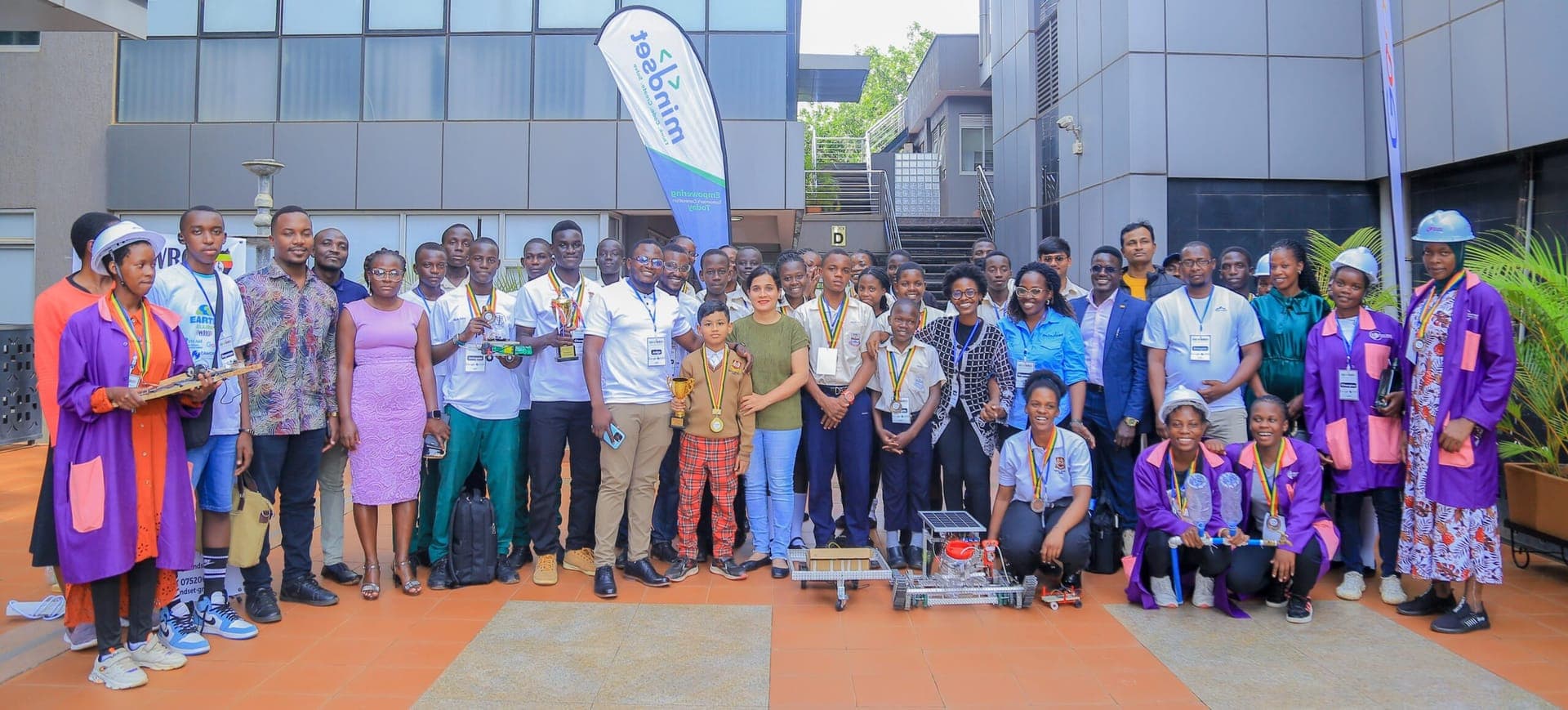
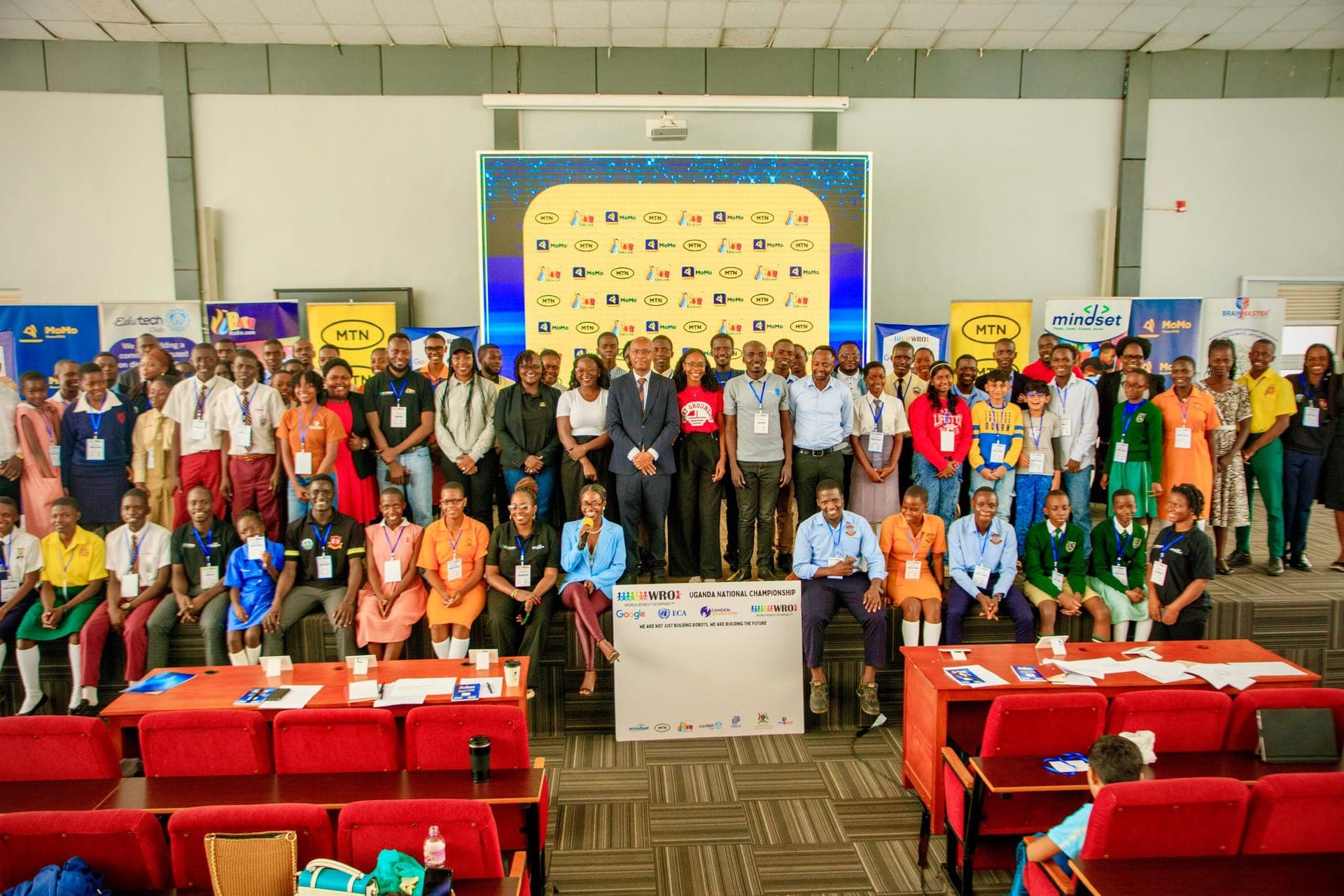
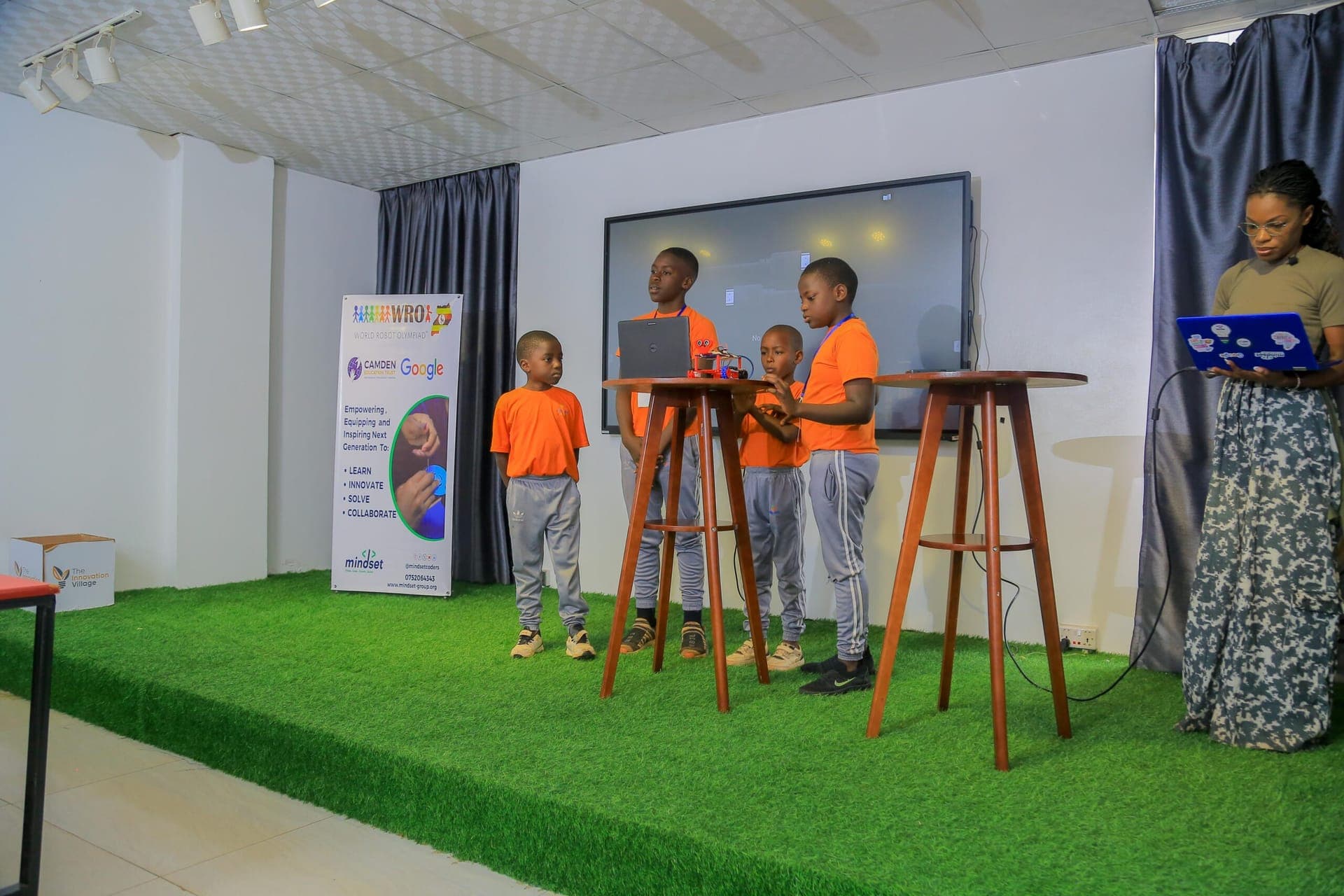
Empowering the next generation
Through pragmatic mentorship and skills development! 🌟 Our young minds are transforming ideas into impactful solutions, bridging the gap between knowledge and technology. Together, we’re paving the way for a brighter, more sustainable future!
Farming in Uganda has always been about community. It’s about shared knowledge passed down through generations. At Akili za Kesho Ventures, our world is filled with data streams, sensor grids, and automated systems. We live and breathe innovation, constantly seeking…
Creative Team
Our team blends seasoned industry leaders with the brightest emerging innovators, creating a dynamic environment of mentorship and hands-on execution. We are builders, thinkers, and partners to the communities we serve. Each member brings not only deep domain expertise but also a profound commitment to our vision of building a bankable, sustainable future from the ground up.
Linda Akulu
Senior Legal and Policy Officer
- Phone:+256 776 906 375
- Email:lindaakulu44@gmail.com
Wahida Feisali Mbabazi
Corporate Secretary
- Phone:+256 742 550 825
- Email:wahidafeisali606@gmail.com
Kabalega John Vianney
Lead, Smart Irrigation & Mechanization
- Phone:+256 758 406 858
- Email:kabalegajohmvianney@gmail.com
Okidi Gabriel Ronald
Head of Creatives
- Phone:+256 781 332 097
- Email:okidigabiron@gmail.com
Oyella Ruth
Head of Public Narrative
- Phone:+256 753 911 563
- Email:ruthoyella1@gmail.coom
Doo-wan Kinumbe
Head of Digital Engineering & Simulations
- Phone:+256 753 911 563
- Email:ruthoyella1@gmail.coom
Mutete Hope Edith
Junior Marketing & Finance Officer
- Phone:+256 753 911 563
- Email:ruthoyella1@gmail.coom
Kasanvu Paul Shadrack
Lead, Hardware Engineering & Refurbishment
- Phone:+256 753 911 563
- Email:ruthoyella1@gmail.coom
Rizer Ashaba
Junior Environmental Scientist & Civil Engineer
- Phone:+256 703 706 679
- Email:rizerashaba@gmail.com
Daniel Biyinzika
Community Outreach & Mobilization Officer
- Phone:+256 705 883 702
- Email:biyinzikadaniel00@gmail.com
Asha Kagoya
Executive Assistant
- Phone:+256 756 515 294
- Email:ashakagoya@gmail.com
Ntale John Bosco
Junior Legal Counsel
- Phone:+256 703 452 496
- Email:boscontale@gmail.com
Esther Faith Apadet
Junior Legal Counsel
- Phone:+256 706 145 197
- Email: apadetesther@gmail.com
Kizito Eunice Naigaga
Junior Legal Counsel
- Phone:+256 745787485
- Email:eunicekizito726@gmail.com
Martinah Nambuya
Junior Marketing & Media Specialist
- Phone:+256 705 162 707
- Email:martinahnambuya266#gmail.com
Kepo Janet Tracy
Junior Media & Communications Professional
- Phone:+256 785 678 705
- Email:janettracykepo@gmail.com
Nambi Valeria
Senior Quantity Surveyor / Building Economist
- Phone:+256 788 823 777
- Email:vnavale4@gmail.com
Dondi Kasongo
Junior Entrepreneurship Strategist
- Phone:+256 708 977 512
- Email:dondikasongo554@gmail.com
Owor Shalom Ezra
Junior Media Systems Technical Operator
- Phone:+256 741 319 869
- Email:eziealpha13@gmail.com
Nakawooya Joanita Teresa
Junior Finance Officer
- Phone:+256 703 183 351
- Email:jnakawooya26@gmail.com
Professional quality delivered!
I believe Africa's future will be built by its own innovators. That's why I founded Akili za Kesho Ventures Co. Ltd to build a bridge between local talent and global-scale problems. Our focus is on critical sectors like the Environment, agriculture and food security, where my team and I apply AI, IoT, and machine learning to create sustainable and resilient communities.
For me, leadership is about empowerment. We build tools, like our unique virtual labs, that give rising talent the practical skills to solve real-world challenges. My ultimate goal is to turn potential into tangible impact, one innovator at a time.
The 2026 4IR Future-Ready Internship Cohort
Step into the 4th Industrial Revolution with Akili za kesho Ventures. We are bridge-building between academic theory and high-performance execution. Our immersive program equips students and graduates with hands-on technical skills through our signature "Plan to Feedback" operational lifecycle. Utilizing cutting-edge AI and Virtual Reality simulations, we don’t just train interns; we forge the next generation of global tech leaders.
Akili za kesho Ventures is the vital talent pipeline needed to de-risk early-stage technology investments across Africa’s tech frontier. They are masterfully calibrating the next generation of 4IR specialists to drive the high-growth, investment-ready ventures that will define our digital economy. I have met Edison the Founder of this venture, and I believe in his vision.