
-45%
Developing Artificial Intelligence Models with Python
The “Developing Artificial Intelligence Models with Python” course is designed …
What you'll learn
In the "Developing Artificial Intelligence Models with Python" course, participants will gain a comprehensive understanding of the fundamental concepts and techniques involved in building artificial intelligence (AI) models using the Python programming language. By the end of the course, learners will be equipped with a diverse skill set that prepares them for real-world applications in AI.
Participants will start by exploring the basics of artificial intelligence, including its history and evolution. They will learn to differentiate between various AI paradigms, such as machine learning, deep learning, and natural language processing, while also understanding the key components and architecture of AI systems. This foundational knowledge will set the stage for more advanced topics.
The course will also focus on mastering Python programming specifically for AI development. Participants will develop proficiency in Python syntax and data structures, learning how to utilize essential libraries and frameworks, such as NumPy, Pandas, and Scikit-learn. Through hands-on exercises, learners will gain experience in writing clean, efficient, and maintainable Python code, which is crucial for successful AI model development.
As the course progresses, participants will dive into implementing machine learning algorithms. They will gain insights into the fundamentals of supervised and unsupervised learning, applying regression, classification, and clustering algorithms to solve real-world problems. Evaluating model performance and optimizing hyperparameters will also be an essential part of this learning experience.
Furthermore, the course will introduce participants to deep learning, where they will explore the principles of deep neural networks. They will implement and train deep learning models for various tasks, such as image recognition and natural language processing. Understanding data preprocessing, model architecture, and optimization techniques will be emphasized to ensure effective model building.
Finally, participants will learn how to deploy and integrate AI models into production environments. This includes packaging AI models for deployment and exploring techniques for integrating them into existing applications and systems. The course will also address the challenges and best practices in maintaining and updating AI-powered solutions, ensuring that learners are prepared for the dynamic nature of AI development.
Throughout the course, participants will work on hands-on projects that allow them to apply the concepts they've learned and gain practical experience in building AI models. By the end of the program, learners will be equipped with the skills and knowledge necessary to design, develop, and deploy effective AI solutions using Python.
-50%
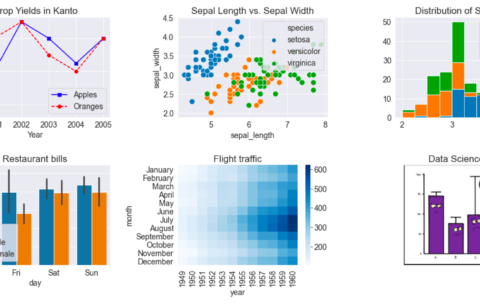
Practical Data Visualization with Python
Transform Your Data into Compelling Visual Stories! In the age …
What you'll learn
- Fundamentals of Data Visualization: Understand the importance of data visualization in data analysis and decision-making. Learn about different types of visualizations and when to use them effectively.
- Data Cleaning and Preparation: Discover essential data cleaning techniques using Python libraries like Pandas. Learn how to prepare your data for visualization to ensure accuracy and clarity.
- Advanced Visualization Techniques: Explore advanced visualization methods, including multi-dimensional plots, animated visualizations, and geographical mapping. Gain hands-on experience with popular libraries such as Matplotlib, Seaborn, and Plotly.
- Data Storytelling: Learn how to craft compelling narratives using your visualizations. Understand how to tailor your message to different audiences and apply design principles that enhance storytelling.
- Practical Application: Engage in collaborative projects and hands-on exercises that allow you to apply what you’ve learned. Create your own visualizations and data stories, and receive feedback from peers and instructors.
-63%
Integrating AI and Machine Learning for Climate-Smart Agriculture
Course Description The Integrating AI and Machine Learning for Climate-Smart Agriculture course …
What you'll learn
- Understand Climate Resilience: Gain insights into the concept of climate resilience and its significance in agriculture. Learn how climate change impacts farming and the importance of adapting practices to ensure food security.
- Explore Sustainable Practices: Discover various sustainable agricultural practices, including crop diversification, soil health improvement, and efficient water management techniques. Understand how these practices contribute to building resilience in farming systems.
- Engage in Hands-On Activities: Participate in practical workshops where you will implement climate-resilient practices. From soil health assessments to water management techniques, you will gain valuable experience that can be applied in real-world agricultural contexts.
- Develop Adaptation Strategies: Work collaboratively to create actionable plans for local farmers, focusing on how to implement climate-resilient practices effectively. Learn to assess local conditions and tailor strategies to meet specific challenges.
- Reflect on Future Directions: Engage in discussions about the future of agriculture in a changing climate. Explore the role of technology, community engagement, and policy advocacy in promoting sustainable practices.
-58%
Deep Learning for Agricultural Innovations
This course delves into the exciting intersection of deep learning …
What you'll learn
- Fundamentals of Deep Learning: Understand the core concepts and architectures of deep learning, including neural networks, convolutional networks, and recurrent networks.
- Data Preparation Techniques: Learn how to collect, clean, and augment agricultural datasets to ensure high-quality inputs for model training.
Model Development and Training: Gain practical experience in building and training deep learning models using popular frameworks like TensorFlow and PyTorch.
- Deployment Strategies: Discover how to deploy trained models into real-world applications, including setting up REST APIs and integrating with IoT devices.
Monitoring and Maintenance: Understand the importance of monitoring model performance post-deployment and learn strategies for maintaining and updating models to adapt to changing conditions.
-96%
Climate Action through Advanced Data Analytics
Unlock the potential of data science in our Climate Action through …
What you'll learn
- Predictive Analytics: Gain a solid understanding of predictive modeling techniques and how to apply them to climate data. You will learn to build models that forecast climate trends and assess the effectiveness of various climate action strategies.
- Data Visualization: Discover how to create compelling visualizations that effectively communicate complex climate data. You will learn to use popular visualization tools and design principles to enhance your presentations.
- Communication Skills: Develop the ability to craft narratives around your data insights. You will learn how to tailor your communication to different audiences, ensuring that your findings resonate and inspire action.
- Evaluation of Climate Strategies: Learn how to evaluate the effectiveness of climate action initiatives using data-driven methodologies. You will assess real-world strategies and provide actionable recommendations based on your analyses.
- Hands-On Projects: Engage in practical projects throughout the course that allow you to apply your skills in real-world scenarios. You will work with actual climate data, develop predictive models, and create visualizations that support climate action.
-55%
Mastering Data Science: Transform Data into Decisions
Unlock the transformative power of data with our Mastering Data Science: …
What you'll learn
In this course, you will embark on a journey through the essential components of data science. You will start by learning the fundamentals of data collection and preparation, gaining insights into how to gather and clean data from various sources. This foundational knowledge is critical, as the quality of your data directly influences the accuracy of your analyses.
As you progress, you will delve into Exploratory Data Analysis (EDA), where you will learn to summarize and visualize data to uncover hidden patterns and trends. This skill is vital for making informed decisions based on data insights. You will explore various visualization techniques, enabling you to present complex information in a clear and engaging manner.
The course will also introduce you to advanced data analysis techniques, including statistical modeling and machine learning. You will learn how to apply these methods to solve real-world problems, optimizing operations and driving strategic decision-making within organizations. Additionally, you will gain experience in using popular data science tools and programming languages, such as Python and R, which are essential for any data scientist.
Finally, you will learn how to effectively communicate your findings to diverse audiences. Understanding how to tell a compelling story with data is crucial for influencing decision-makers and driving change within organizations. By the end of this course, you will be equipped with the skills and confidence to transform data into actionable insights, positioning yourself as a key player in the data-driven landscape of today’s job market.
-60%
Practical Deep Learning for Sustainable Solutions with Python
The “Practical Deep Learning for Sustainable Solutions with Python” course …
What you'll learn
Understand the Basics of Deep Learning: Gain a solid foundation in deep learning concepts, including neural networks, convolutional networks, and recurrent networks, and how they can be applied to environmental data.
- Build and Train Models: Learn how to construct, train, and optimize various types of neural networks using popular frameworks like Keras and TensorFlow, with a focus on real-world environmental datasets.
- Apply Advanced Techniques: Explore advanced deep learning techniques such as Convolutional Neural Networks (CNNs) for image classification and Recurrent Neural Networks (RNNs) for time-series analysis, specifically tailored to environmental applications.
- Deploy Your Models: Discover how to deploy your trained models in real-world scenarios, using tools like Flask to create web applications that serve predictions and insights.
- Engage in Hands-On Projects: Participate in practical activities and projects that allow you to apply what you've learned, culminating in a final project where you will deploy your own deep learning model.
- Explore Real-World Case Studies: Analyze case studies that demonstrate the successful application of deep learning in environmental science, providing inspiration and context for your own projects.